You bought a compliance platform: what’s left before your first SOC 2 audit
You have a compliance platform and a first SOC 2 audit ahead. What is still your team’s to do: the scope, policies that match practice, the records, the system description, and questions for your auditor.
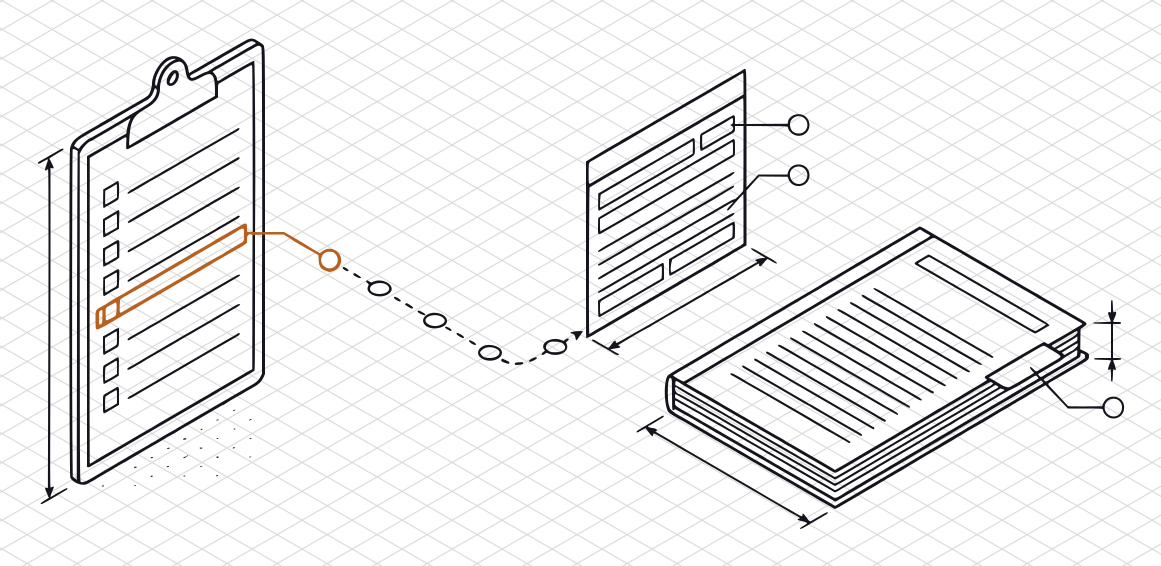
You chose a compliance platform to organize your SOC 2 work. The report at the end is still about your company: a CPA firm gives an opinion on your system, and your company’s management writes the description of that system. So some of the work is yours whatever tool you keep it in.
That work, in the order we would do it: write the scope in one sentence, make each policy say what your team does, find a dated record behind every control marked done, write the system description, take your questions to the auditor early, and start the audit period only once the records are running.
Settle the scope first
Name the product or system the report will cover, in one sentence. Security, the common criteria, is the base; the other four categories (availability, processing integrity, confidentiality, privacy) are optional, and which go in is a decision for you, your customers, and your CPA firm. Our plain-English guide to the criteria covers what each one is about.
Then hold your control list up to that sentence. If the list covers systems the scope leaves out, or leaves out systems the scope names, change one of them before anything else. Every later step reads against the scope.
Make the policies say what you do
If a policy started as a template, from any source, read it against what your team actually does. A policy that describes a control nobody runs is worse than a missing one: it is a written statement that isn’t true. That is our view, and the four-state sort in our readiness guide is how we would find them.
- List what each policy promises. One line per thing it says your team does: reviews access every quarter, approves changes before release, tests a backup restore.
- Ask the owner of each line. Does it happen, how often, and where is it written down?
- Change the policy or the practice. Edit the sentence to say what you do, or start doing what it says. Either is fine; a sentence that stays untrue is not.
- Date and approve it. Mark drafts as drafts, and record who approved each policy and when.
If policies are missing altogether, our guide to the first five policies says which to write first.
Back every control marked done with a record
Treat each status in your control list as a claim to check. For each control marked done, find two things: the record that shows it ran, and the person who owns it. A record is a dated trace of the work: an access review with its date and reviewer, a change ticket with its approval, a restore test with its result.
Where you can’t find the record, change the status or make the record. Where you find it, note where it lives, so nobody has to look for it twice.
This matters most for a Type 2 report, which covers a period you and the CPA firm agree on: the records have to come from inside that period. Our guide on whether you need SOC 2 yet explains the two types.
Write the system description in your own words
For a SOC 2 report, your company’s management writes a description of the system, and the CPA firm gives an opinion on whether that description is fair. A Type 2 report adds an opinion on whether the controls worked in practice. So the description is yours to write, even if you start from a template.
The AICPA’s criteria for what a description must contain need an account to read, so this list is ours, as a starting point:
- what the product does, and for whom;
- where it runs: the hosting, the main services, and the regions;
- the software and the data stores that make it up;
- the people and teams who build and run it;
- the customer data it holds, and where;
- the outside services that touch that data;
- the categories in scope, and anything left out on purpose.
Then ask your auditor what they expect the description to cover, and compare. Every fact in it should match your policies and your control list; where the three disagree, one of them is wrong.
Questions to put to your auditor
Ask these early, before the audit period starts. They are our list, not a standard’s.
- Type 1 or Type 2? For a Type 2, when does the period start, and how long is it?
- Which categories, and which systems, are in scope?
- How do you want records delivered, and can you work from the exports of our compliance platform?
- Our hosting provider and other outside services run some of our controls. How will their own reports, if they have them, show in ours?
- What do you need from us before your work starts, and by when?
- Do you also offer readiness work? If you do, how do you keep it separate from your audit judgment?
Choose when the audit period starts
For a Type 2, agree the start with your CPA firm, and start once the controls in scope are running and recording. A period that begins before the records do has gaps in its records from the first day. That is our judgment; your auditor sets the rules for your audit.
When you finish the steps above, you have a scope sentence, policies that match what you do, a control list whose statuses you can back with records, a system description draft, and a list of questions for your auditor.
Sources
- Chris Halterman, Expanding Service Organization Controls Reporting, Journal of Accountancy, July 2011, read 2026-10-28 (management prepares the written description of the system; what Type 1 and Type 2 opinions cover). The article is old, and we use it only for those points. The AICPA’s own definitions and its description criteria need an account to read.
The order of work, the checks, the description list, and the questions are our own judgment. None of it comes from client engagements, and none of it cites an outside source.